
Quick Summary
Olivia Bottega and Avery Austin both sell wedding dresses online, so the right choice depends on fit, fabric and total cost rather than the headline price. Compare olivia bottega vs avery austin on how each brand handles measurements, alterations and returns before you order.
- Ask whether each gown uses standard sizing plus alterations or made-to-measure cutting.
- Order to your largest measurement, since bridal seam allowances are narrow and cannot be let out much.
- Get a rough alteration quote from a local tailor and add it to the dress price and shipping.
- Request a swatch of the exact fabric and lining, then compare it side by side in daylight.
- Read each brand's exchange and refund terms and get every fee in writing before paying.
Table of Contents
- Olivia Bottega vs Avery Austin at a Glance
- Sizing and Fit: How to Measure for Wedding Dress Orders
- Fabric Quality and Swatch Comparisons
- Pricing, Hidden Costs and Post-Purchase Alteration Fees
- Shipping Timelines, Returns and Customer Service
- Online Wedding Dress Shopping Tips Before You Order
- Choosing Between Olivia Bottega, Avery Austin and TABD BRIDAL
- Frequently Asked Questions
Are Olivia Bottega and Avery Austin Worth Buying From?
Last Updated: October 29, 2026
Olivia Bottega vs Avery Austin at a Glance
Shoppers comparing olivia bottega vs avery austin reviews usually want one answer: which brand is worth the money for a wedding dress bought without trying it on. Both brands sell online, both target brides who cannot visit a boutique, and both ask buyers to trust measurements and photos. The differences show up in how each handles fit, fabric and post-purchase changes.
This guide looks at what matters most when you compare the two. We focus on the buying criteria you can check yourself and on the questions to put to each brand before you order.
Quick comparison points:
- Fit guidance: Check whether the brand asks for detailed body measurements or offers a size chart only.
- Fabric detail: Ask for close-up photos of the actual material, not only styled shots.
- Total cost: Add alteration, shipping and rush fees to the listed price.
- Returns: Read the exchange and refund terms before paying.
Sizing and Fit: How to Measure for Wedding Dress Orders
Most online wedding dress problems start with measurements, but the deeper issue is which sizing model each brand uses. Brides buying remotely from brands like Olivia Bottega and Avery Austin face a choice of fit path, and that choice can drive your alteration bill more than any single measurement.
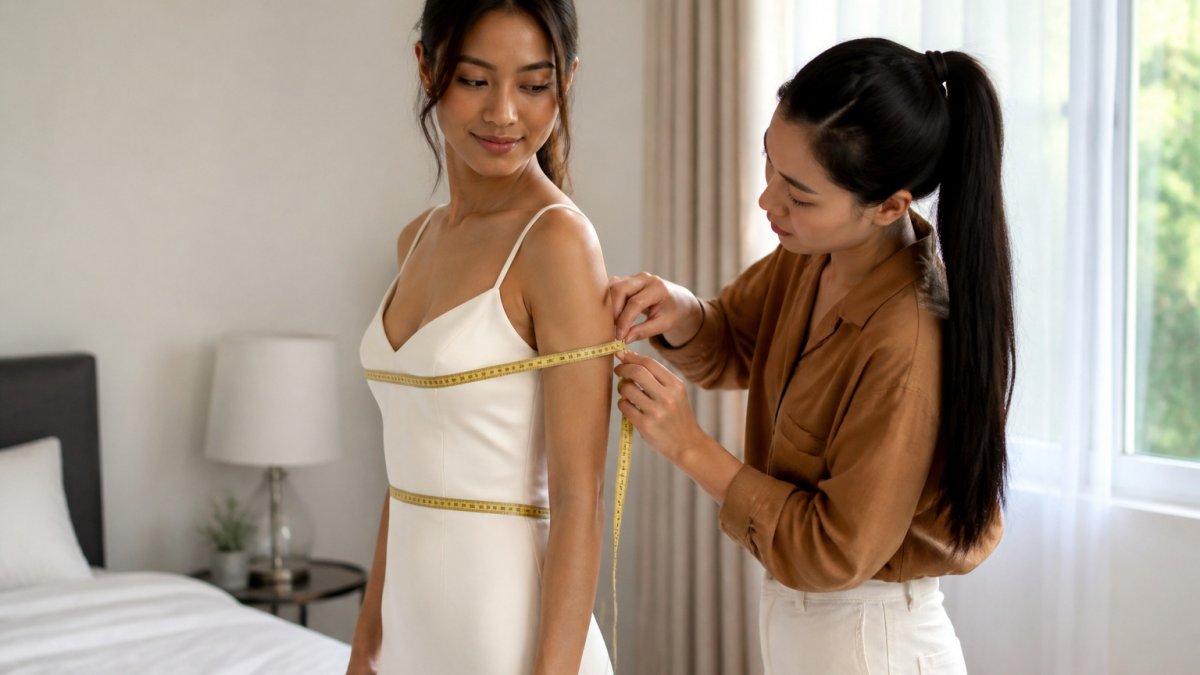
Two fit paths to compare before you order:
- Standard sizing plus alterations. Some brands ship a stock size closest to your measurements, and a local tailor takes it in. This route can carry a lower sticker price but shifts cost and risk into the post-purchase phase.
- Made-to-measure (MTM). Some brands cut to your submitted measurements. MTM can reduce the need for major reconstruction, but it is only as good as the numbers you send.
Ask each brand directly which path the specific gown uses. A dress listed at a low price may end up costing more than a made-to-measure gown once tailoring is added.
How to measure so the numbers survive shipping
Measure with a soft tape over the undergarments you plan to wear, ideally with a second person. Record bust at the fullest point, waist at the narrowest, hips at the widest, plus hollow-to-hem (from the hollow at the base of the neck to the desired hem) and your height in the shoes you will wear. Bridal sizing runs differently from ready-to-wear, so ignore your everyday size and use only the brand's chart.
The alteration cost nobody quotes upfront
This is the gap most comparison threads skip. Common bridal alterations include hemming, taking in the bodice, shortening straps, adding bust cups, and a bustle for the reception. Complex lace or beaded fabrics can cost more to alter than plain crepe or satin because the detail must be detached and re-sewn.
Before you buy, ask your local tailor for a rough alteration quote on the silhouette you are considering. Add that estimate to the dress price and shipping, since the lower headline price is not always the lower total cost.
For a full walkthrough of taking measurements at home, read our how to measure for wedding dress guide.
The table below summarises the key measurement steps and fit considerations covered in this section.
| Step | What to do | Note |
|---|---|---|
| Measure bust | Measure at the fullest point | Use a soft tape over undergarments |
| Measure waist | Measure at the narrowest point | Use a soft tape over undergarments |
| Measure hips | Measure at the widest point | Use a soft tape over undergarments |
| Hollow-to-hem | Measure from the neck hollow to desired hem | Include height in the shoes you will wear |
| Sizing | Use the brand's chart, not your everyday size | Bridal sizing differs from ready-to-wear |
| Order size | Order to your largest measurement | Seam allowances are narrow, so you can take in but not let out much |
Fabric Quality and Swatch Comparisons
Fabric is where online shopping is hardest, and it is also where the ranking forum threads give you almost nothing objective. Photos flatten texture and studio lighting can make a budget polyester satin read as silk. The fix is to evaluate swatches with a repeatable method before you commit to a full gown, a step most comparison content skips entirely.
Request the right swatch
When shopping for a gown, ask the brand for a swatch of the exact fabric used in the gown you want, not a generic "fabric sample." Specify the colorway and the lining, because the shell and lining are often different materials.
A five-point swatch test you can run at home
- Drape. Hold the swatch by one corner and let it hang. Silk and high-quality crepe fall with soft, fluid folds; stiff polyester holds angular creases. Drape predicts how the gown will move in photos and in person.
- Sheerness against light. Hold the swatch up to a window. If you can see your hand clearly through a single layer, note whether the gown's construction includes a lining and how opaque it is.
- Weight and hand-feel. Rub the swatch between your fingers. A fabric that feels papery or slick usually signals a lower-grade weave; a slight texture and weight often signals better construction.
- Recovery and wrinkle. Crush the swatch in your fist for a few seconds and release. Fabrics that stay creased will need steaming before the ceremony; fabrics that spring back travel better.
- Edge and weave. Look at the cut edge under good light. A tight, even weave and a clean edge suggest better finishing than a fraying, loose weave.
Match the fabric to the silhouette
Fabric choice is not only about quality, it is about whether the material suits the cut. Structured fabrics like mikado and duchess satin hold a ballgown's shape; fluid fabrics like crepe and chiffon suit bias-cut and column dresses; lace and beaded overlays add cost and alterability concerns because detail must be handled carefully during tailoring. When you compare gowns from any brand, ask which fabric each style uses and whether that fabric matches the silhouette you want, rather than judging the dress from styled photos alone.
What the swatch tells you about alteration cost
Beaded, sequined, and heavily laced fabrics can be more expensive to alter than plain crepe, satin, or chiffon, because the detail must be removed and re-applied at the seam. If you are choosing between similar gowns, the simpler fabric may cost less to tailor.
For a broader look at evaluating quality remotely, see our guide to finding quality wedding dresses online.
Pricing, Hidden Costs and Post-Purchase Alteration Fees
The listed price is often not the full cost. Alterations, shipping, rush delivery and fitting adjustments can add to the total. Ask each brand to itemize these charges in writing before you commit.
Pricing at TABD BRIDAL depends on the dress, quantity, dates and delivery, so please check our website or request a quote for current figures. Whichever brand you choose, compare the final delivered cost, not only the headline price.
For a broader look at cost trade-offs, see custom wedding dress vs off the rack.
Shipping Timelines, Returns and Customer Service
Timing matters if your wedding is close. Confirm with the retailer how long production and shipping take, and whether any rush option is offered. Read the return and exchange policy carefully before ordering.
Online Wedding Dress Shopping Tips Before You Order
Buying online works well when you prepare. Save photos of the dresses you like, check reviews from verified buyers, and ask for real customer photos rather than only styled images. Keep your measurements, the brand's chart and your order confirmation in one place.
Our guide to finding quality wedding dresses online covers more tips for shopping remotely with confidence.
Choosing Between Olivia Bottega, Avery Austin and TABD BRIDAL
Choose the brand whose fit guidance, fabric detail and total cost suit your wedding. If you want a complete look that includes capes, veils and jewelry from one place, and you want made-to-measure fit options without high-end boutique prices, TABD BRIDAL is designed with that buyer in mind.
If you prefer a brand with a specific design signature, compare the styles directly against your own measurements and budget. Whichever you pick, get every fee, timeline and return term in writing first.
Frequently Asked Questions
Is it safe to buy a wedding dress from Olivia Bottega?
Buying from any online bridal retailer carries some risk, mostly around sizing and delivery rather than payment security. Check the brand's current return and exchange policy, confirm whether custom sizing is offered, and read recent customer reviews that mention fit and fabric. Keep order confirmations and photos of the garment on arrival in case you need to raise a problem with the retailer or your payment provider. Verify current policies directly on each brand's website, since terms change.
Does Avery Austin have a physical store location?
Check the brand's website for any showroom or in-person fitting information, as this can change. If no physical location is listed, plan on ordering online and relying on the brand's measurement guide and return terms. Brides who cannot visit a store often benefit from comparing a retailer's sizing chart against their own measurements before ordering.
What are the return policies for Olivia Bottega vs. Avery Austin?
Return and exchange terms differ between brands and can change, so read each retailer's current policy before buying. Pay attention to whether custom or made-to-order dresses are returnable, who pays return shipping, and the deadline for reporting damage or sizing problems. Save the policy page as a screenshot at the time of purchase.
Are there hidden costs when ordering wedding dresses online?
Common extra costs include shipping, duties on international orders, alterations after delivery, steaming or preservation, and accessories such as veils or capes. Ask each retailer whether alterations are included or charged separately, and get the full total before confirming an order. Pricing varies by style and quantity, so request a current quote from the brand rather than relying on estimates.
Find the look that fits your day and your budget. Browse the TABD BRIDAL collection to see minimalist gowns, courthouse dresses and bridal accessories in one place, and ask our team about made-to-measure options.
