
Last Updated: October 23, 2026
Quick Summary
To find quality wedding dresses online, vet the seller before you commit: look for a real business address, clear return and shipping terms, photos on different body types, and a size chart with real measurements in centimetres. Then compare total cost, read the fabric composition and construction details, and confirm the return policy in writing before you pay.
- Walk away from sites with no return policy, no physical address, or payment by bank transfer or gift card.
- Add shipping, taxes, alterations, and return fees to the dress price before deciding.
- Ask for fabric composition in writing; a dress called silk crepe should list silk as the fibre.
- Measure bust, waist, hips, shoulder-to-waist, and height, then compare to the seller's chart in centimetres.
- Our made-to-measure pieces ship in 2 to 4 weeks, so confirm dispatch dates by email.
Table of Contents
- Step 1: Start with a Retailer-Vetting Checklist
- Step 2: Compare Total Cost and Value, Not Just the Price Tag
- Step 3: Use a Wedding Dress Fabric Guide to Judge Quality
- Step 4: Read the Wedding Dress Size Chart Carefully
- Step 5: Plan Your Wedding-Date Ordering Timeline
- Step 6: Understand the Wedding Dress Return Policy Before You Pay
- Step 7: Budget for Wedding Dress Alterations and Fit Fixes
- Conclusion
- Frequently Asked Questions
Step 1: Start with a Retailer-Vetting Checklist
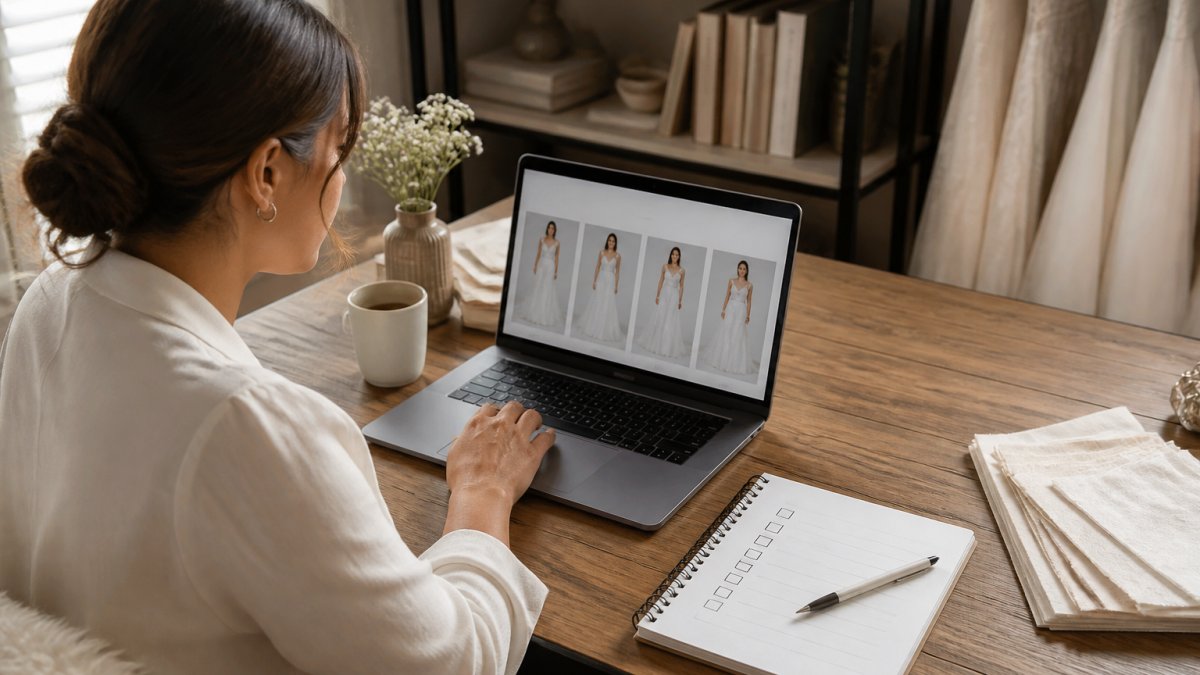
Learning how to find quality wedding dresses online starts with one habit: vet the seller before you fall in love with a gown. At TABD BRIDAL, we tell brides the same thing every week.
Trust Signals That Matter
A trustworthy seller usually shows a few basics without being asked:
- A real business address and contact email, not just a form
- Clear terms for returns, shipping, and made-to-measure orders
- Photos of dresses on different body types, not one model
Red Flags and Scam Warning Signs
Walk away if a site has no return policy, no physical address, or prices that seem too good for the fabric described. Be wary of stock photos reused across several stores. Also watch for countdown timers pushing you to pay fast. Pressure is a sales tactic, not a service.
Step 2: Compare Total Cost and Value, Not Just the Price Tag
The dress price is only part of what you pay. A cheap gown that needs major alterations can cost more than a well-made one that fits.
Here is how two paths often compare:
| Cost Item | Off-the-Rack Cheap Dress | Made-to-Measure Dress |
|---|---|---|
| Dress price | Lower upfront | Higher upfront |
| Alterations | Often high | Minimal |
| Return shipping | Sometimes charged | Varies by seller |
| Total risk | Higher | Lower |
Our minimalist bridal gown with a circle skirt in soft double-layer crepe is a good example of value done well.
If you are weighing whether a low price signals poor value, read our guide on whether affordable courthouse wedding dresses are worth it before you commit.
Step 3: Use a Wedding Dress Fabric Guide to Judge Quality
A wedding dress fabric guide helps you judge quality before the dress arrives, but fabric names alone are not enough. Photos hide a lot, and most online listings show a gown on one model under studio lighting. The practical skill is learning to read the fabric description and the product photos together, then asking the seller the right questions.
Start With Fabric Composition, Not Fabric Names
Fabric names tell you how a material behaves; composition tells you what you are actually paying for. A dress described as "silk crepe" should list silk as the fibre, not polyester. The US Federal Trade Commission textile rules require sellers to label fibre content clearly, so a legitimate listing should be able to tell you the exact composition on request.
Common bridal fabrics and what they signal:
- Crepe: soft, thick, and hangs cleanly with few wrinkles. Good crepe recovers its shape when stretched gently; cheap crepe stays baggy.
- Silk faille: structured with a subtle sheen and holds shape well. It should feel crisp, not stiff or papery.
- Guipure lace: heavier lace with a raised pattern and no net backing. Check that motifs are joined by thread, not glued.
If the composition is missing, ask for it in writing. A seller who cannot or will not name the fibre is telling you something.
Construction Checks You Can Make From Photos and Questions
You cannot touch the dress online, but you can inspect the listing and ask targeted questions. Most practitioners find that these five checks catch the majority of quality problems:
- Lining: A quality bodice is fully lined, often with a breathable natural fibre. Ask whether the lining is polyester or cotton-blend; polyester lining traps heat.
- Seams: Look for photos of the inside of the dress. Finished seams (French seams, bound seams, or serged edges) point to care. Raw, fraying edges are a warning.
- Closures: Invisible zippers, covered buttons, and hook-and-eye finishes should sit flat. Ask for a close-up of the back closure.
- Boning and structure: A strapless or fitted bodice needs internal boning or a corselet. Ask how many bones the bodice has and whether they are spiral steel or plastic.
- Hem and train: A clean hem follows the curve of the skirt evenly. Ask for a photo of the hem from inside and out.
Read the Product Photos Like an Editor
A single model shot is not enough. Look for:
- Photos on different body types and heights
- Close-ups of lace, beading, and seams
- A shot of the dress in natural light, not only studio lighting
If the same image appears on several unrelated stores, treat it as a stock photo and ask for a real photo of the actual dress.
Match the Fabric to Your Venue and Season
Fabric choice is also a practical decision. Heavy crepe and faille suit cool-weather weddings and structured silhouettes. Organza and chiffon suit summer and outdoor ceremonies. Guipure lace adds weight and drama but can feel warm.
When you compare two dresses at similar prices, the one with a named fibre, a full lining, and finished seams is usually the better value, even if the other looks more elaborate in photos.
Step 4: Read the Wedding Dress Size Chart Carefully
A wedding dress size chart is not the same as your everyday clothing size. Bridal sizing often runs smaller, and each designer sets their own numbers. Always measure yourself fresh rather than guessing.
Casual short wedding dress, Engagement party, beach wedding, elopement →
Measure these five points:
- Bust at the fullest part
- Waist at the narrowest point
- Hips at the widest part
- Shoulder to waist length
- Height in bare feet
Compare your numbers to the seller's chart in centimetres. If you fall between sizes, ask about custom sizing. Our made-to-measure dresses are cut to your measurements, which matters most for brides who have struggled with one-size-fits-all sizing.
Step 5: Plan Your Wedding-Date Ordering Timeline
Shipping time decides whether a dress is even possible. Work backwards from your date, and leave a buffer for alterations and delivery delays.
- 12+ weeks out: order made-to-measure with room to spare
- 6 to 8 weeks out: confirm dispatch times in writing before paying
- 2 to 4 weeks out: ask about rush options and in-stock pieces
Our made-to-measure pieces ship in 2 to 4 weeks, so a tight timeline needs a conversation first. If your date is close, you can rush your order to meet your timeline. Always get the dispatch date by email so you have proof.
Step 6: Understand the Wedding Dress Return Policy Before You Pay
A wedding dress return policy tells you how much risk you carry. Read it before checkout, not after the box arrives, and read it as a decision document rather than legal boilerplate. The goal is to know exactly what you can and cannot undo if the dress is wrong.
The Five Questions to Answer Before Paying
Ask these in writing, and keep the replies:
- When does the return window start? From delivery or from order date? A 14-day window from order can expire before the dress even ships.
- Are made-to-measure dresses returnable? Many boutiques treat custom dresses as final sale, which is fair given the work involved, but you need to know before you order.
- Who pays return shipping? And is the original shipping refunded, or only the dress price?
What to Do When the Dress Arrives and Does Not Fit
This is where most online dress guides go quiet, and it is the moment that matters most. Work through this sequence in order:
- Document everything immediately. Photograph the packaging, the dress, the size tag, and the fit issue before you alter or wear it. Note the delivery date.
- Check the return deadline. Count from the date the policy specifies, not the date you opened the box.
- Contact the seller in writing. Email or use the site's message system so you have a timestamped record. Describe the problem plainly and ask for their proposed resolution.
- Ask about exchange or remake before refund. Many made-to-measure sellers will remake a dress that arrived off-measurement; that is often faster than a refund and a new order.
- Consider local alterations. If the issue is a hem, strap, or bust adjustment, a tailor may fix it for less than the cost and time of a return. Get a quote first.
- Know your payment-provider options. If the seller will not respond or the dress is materially different from the listing, credit-card chargeback and PayPal dispute processes exist for exactly this. Keep your photos, emails, and the listing screenshots.
Read the Policy Against the Listing
A return policy is only as good as the listing it protects. Before you pay, compare the dress description to the policy: if the listing promises "made to measure" but the policy says custom orders are final sale, ask how fit errors are handled. A seller who stands behind their measurements will usually say so in writing.
Save the Paper Trail
Keep every email about sizing, timelines, fabric, and returns in one folder. If a dispute arises, the seller's own written statements are your strongest evidence. Screenshot the product page at the time of purchase, including the size chart and fabric description, because listings can change after you order.
Step 7: Budget for Wedding Dress Alterations and Fit Fixes
Wedding dress alterations are normal, even on a well-fitting gown. A hem, a strap adjustment, or a bust tweak is common. Budget for them as a separate line, and find a professional tailor early.
Expect to pay for:
- Hemming and length changes
- Bust and waist adjustments
- Strap or sleeve fixes
A made-to-measure dress usually needs fewer fixes, which keeps this cost down. Book your tailor a few weeks before the date, and bring the shoes you will wear so the hem sits right.
Conclusion
Finding a dress you trust online takes a checklist, not luck. Vet the seller, compare total cost, read the fabric and size details, and lock in your timeline before you pay.
At TABD BRIDAL, we built our boutique around exactly this. Our made-to-measure dresses are cut to your measurements, our collection covers gowns and accessories in one place, and our pricing stays budget-friendly.
Frequently Asked Questions
How can you tell if an online wedding dress is good quality?
Check the fabric description first. Look for named materials like silk faille, guipure lace, or double-layer soft crepe rather than vague terms like 'premium fabric.' Zoom into product photos to inspect seams, lining, and finishing. Request close-up shots if needed. Read customer reviews that mention construction and fit, not just appearance. A retailer that lists exact fabric content and offers made-to-measure sizing is usually a safer bet than one with generic descriptions and no sizing detail.
What should you check before ordering a wedding dress online?
Before you order, confirm five things: the retailer's return policy, the wedding dress size chart with your exact bust, waist, and hip measurements, the shipping timeline against your wedding date, the fabric and construction details, and whether custom sizing is available. Also check for real customer photos and reviews. If any of these details are missing or vague, contact the seller before paying. A legitimate retailer will answer sizing and policy questions clearly.
Can you return a wedding dress bought online?
Return policies vary widely. Some online bridal retailers accept returns within 7 to 14 days on standard sizes, while made-to-measure or custom dresses are often final sale. Before ordering, read the wedding dress return policy carefully: check the return window, whether shipping costs are refundable, and whether the dress must be unworn with tags attached. If the policy is unclear, ask the seller in writing. Keep that confirmation in case you need to dispute a charge.
How do you choose the right wedding dress size online?
Use a soft measuring tape and take your bust, waist, and hip measurements over light clothing. Compare them to the retailer's wedding dress size chart, not your usual clothing size, because bridal sizing often runs differently. If you fall between sizes, size up and plan for alterations. Many online boutiques, including TABD Bridal, offer made-to-measure dresses that use your measurements directly, which reduces the need for extensive alterations and gives a better fit from the start.
