
Quick Summary
Affordable made-to-measure wedding dresses are cut from an existing pattern adjusted to your own measurements, so they fit better than off-the-rack sizes without the cost of fully bespoke gowns. Compare total cost, including customization, fittings, alterations and shipping, before paying a deposit.
- Measure bust, underbust, waist, hips, shoulders, back length and total length, wearing your planned undergarments.
- Record each measurement in one consistent unit, and measure twice if numbers shift by more than a centimeter.
- Ask every provider in writing what is included in the base price, what is optional, and what is excluded.
- Build a total-cost table comparing base price, customization, fittings, alterations, rush fees and shipping.
- Pay by a method that offers dispute recourse and confirm the fit guarantee and remake policy in writing first.
Table of Contents
- What Made-to-Measure Actually Means (and How It Differs from Bespoke and Ready-Made)
- Made to Measure vs Off the Rack: Which Option Fits Your Budget and Body
- How to Measure Yourself for a Wedding Dress Before You Order
- Custom Wedding Dress Cost Breakdown: Base Price, Alterations and Hidden Fees
- Affordable Made-to-Measure Styles, Fabrics and Customization Options
- Wedding Dress Timeline for Custom Orders: From Order to Delivery
- How to Verify a Made-to-Measure Seller and Protect Your Purchase
- Book Your Made-to-Measure Fitting with TABD BRIDAL
- Frequently Asked Questions
What Made-to-Measure Actually Means (and How It Differs from Bespoke and Ready-Made)
Made-to-measure is a middle ground between ready-made dresses and fully bespoke gowns. A made-to-measure dress is cut from a pattern adjusted to your own measurements, so the fit follows your body rather than a standard size chart. You can browse the made-to-measure dress collection to see the styles available.
The three categories are easy to mix up, so it helps to separate them clearly:
- Ready-made (off the rack): Produced in standard sizes and sold as-is. You choose the closest size and usually pay for alterations afterward.
- Made-to-measure: Built from an existing pattern, then adjusted to your bust, waist, hip, and length measurements before production.
- Bespoke: Drafted from scratch for one client, with a bespoke pattern, multiple fittings, and fabric and design choices made together with the maker.
The practical difference is who does the fitting work. Ready-made puts the burden on you and your seamstress after delivery. Bespoke puts it on the maker's time, which is why it costs the most. Made-to-measure sits in between: the fit is built in before the dress is cut, but the design stays within a defined range of silhouettes and customization options.
Many brides find made-to-measure gives them the fit of a custom gown while keeping the choice of styles manageable. The tradeoff is that you cannot change the core structure of the design as you could with bespoke.
Made to Measure vs Off the Rack: Which Option Fits Your Budget and Body
The biggest question most brides face is whether a made-to-measure dress is worth it compared with buying off the rack. The answer depends on your body shape, expected alteration work, and budget.
Off-the-rack dresses are simplest when your measurements fall neatly within a standard size range. If your bust, waist, and hips line up with one size and you are close to the sample length, alterations are often modest.
Off the rack can still be the better choice when you are on a tight timeline, when you find a sample dress that already fits, or when you want to avoid waiting for production. For a deeper comparison of the two options, read custom wedding dress versus off the rack.
Compare the total cost, not just the sticker price. Add the expected alteration cost to an off-the-rack dress and compare it with the made-to-measure price.
How to Measure Yourself for a Wedding Dress Before You Order
Accurate measurements are the foundation of any made-to-measure order. Small errors in bust or waist can change how a dress sits, so take your time and follow a consistent method.
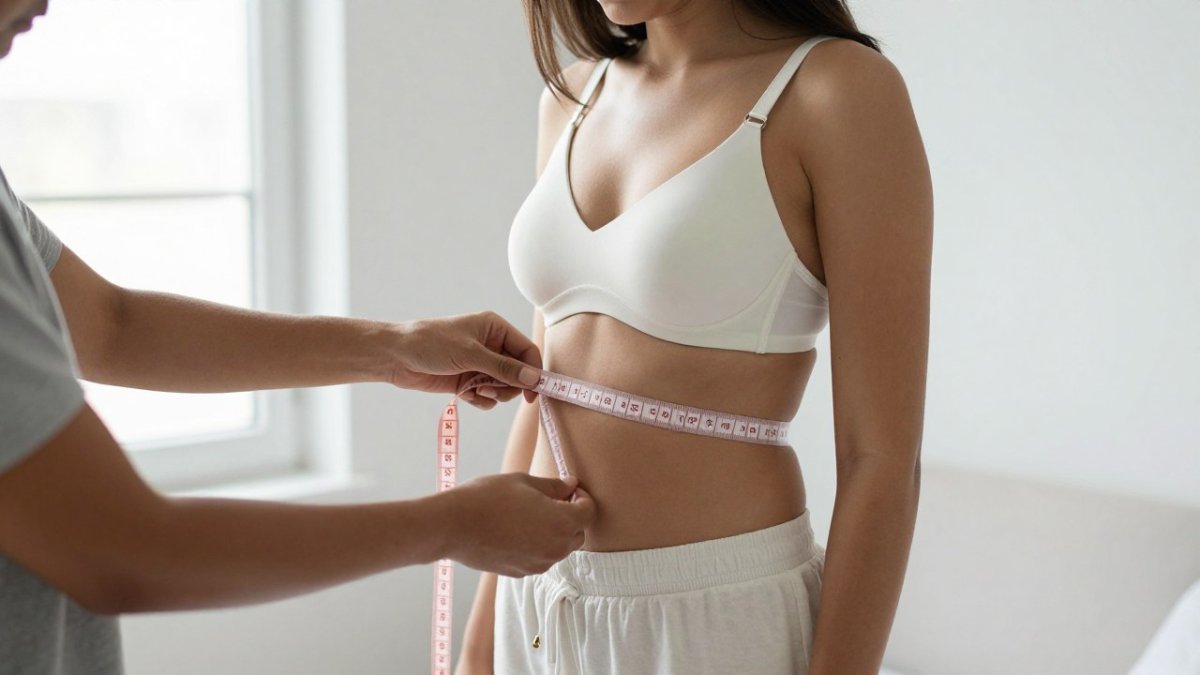
Wear the undergarments you plan to wear on the wedding day, or a well-fitting bra, and stand naturally with your feet together. Have a friend take the readings if possible, since the tape is easier to keep level and snug.
Take these measurements:
- Bust: Around the fullest part of your chest, keeping the tape level across the back.
- Underbust: Directly beneath the bust, where a bodice band would sit.
- Waist: At the narrowest point, usually just above the belly button.
- Hips: Around the fullest part of your hips and seat.
- Shoulder to shoulder: Across the back from one shoulder point to the other.
- Back length: From the base of the neck to the natural waist.
- Total length: From the shoulder down to the floor in the shoes you will wear, or the length you want the hem to reach.
Keep the tape snug but not tight, and do not hold your breath. Record each number in inches or centimeters and note which unit you used, because mixing units is a common source of error.
Watch out: If your measurements change by more than a centimeter between readings, pause and measure again on a different day. Shifts in weight, posture, or bloating can throw off the numbers, and the dress will be cut from whatever you send.
Custom Wedding Dress Cost Breakdown: Base Price, Alterations and Hidden Fees
Custom wedding dress pricing has several layers, and the advertised price is rarely the full cost.
Start with the base price, which covers the dress itself: pattern, fabric, construction, and the standard customizations included in that tier. Fabric is one of the largest variables.
Then add each of the following line items, asking every provider to confirm in writing whether it is included, optional, or excluded:
- Customization fees: Changes to neckline, sleeves, train, or back detail beyond the standard options. Ask which changes are free, which carry a flat fee, and which are priced by the hour.
- Fitting appointments: Some makers include one or two fittings in the base price; others charge per session. Confirm how many are included and what an extra fitting costs.
- Alteration work after delivery: Hemming, bustling, taking in the bodice, or adjusting straps. Even a made-to-measure dress often needs minor tweaks once it is on your body.
- Rush production: Shortened timelines typically carry a premium, sometimes a percentage of the base price rather than a flat fee.
- Shipping and handling: Often overlooked, especially for international orders. Ask whether the dress ships insured and who files a claim if it is lost or damaged.
- Duties and taxes: Cross-border orders may attract import duties or VAT that the seller does not collect upfront. Check your country's threshold before you order.
- Accessories: Veils, capes, belts, and jewelry are sometimes sold separately. TABD BRIDAL offers these as part of a complete look, but confirm what is bundled and what is not.
- Storage and pressing: A gown may need professional steaming or boxing before the wedding day, especially if it ships folded.
A practical way to compare is a simple table with one column per provider and one row per line item above.
Ask every provider for a written breakdown before you pay a deposit.
Pricing for made-to-measure orders depends on the quantity of work involved, your chosen dates, and delivery requirements.
The headline price rarely reflects the full cost, so the article lists the line items to confirm before paying a deposit.
| Cost item | What to confirm | Note |
|---|---|---|
| Base price | Pattern, fabric and standard customizations | Fabric is one of the largest variables |
| Customization fees | Which changes are free, flat-fee or hourly | Priced beyond standard options |
| Fitting appointments | How many are included | Extra sessions may be charged |
| Alterations after delivery | Hemming, bustling, bodice or straps | Often needed even for made-to-measure |
| Rush production | Premium over the standard timeline | May be a percentage of base price |
| Shipping and handling | Insurance and who files a claim | Often overlooked for international orders |
| Duties and taxes | Import duties or VAT on cross-border orders | Check your country's threshold |
| Storage and pressing | Steaming or boxing before the wedding | Needed if the gown ships folded |
Affordable Made-to-Measure Styles, Fabrics and Customization Options
Affordable made-to-measure dresses cover many styles, from minimalist sheaths and A-line gowns to structured ballgown silhouettes and short wedding dresses for courthouse ceremonies. Start by deciding which silhouette suits your figure and venue, then choose fabric and details that fit your budget.
Fabric affects both the look and the price. Ask for fabric samples when possible, since photos rarely show how a material drapes.
Keep customizations focused. Each change adds fitting time and cost, so choose two or three details that matter most rather than changing every element of the design.
Wedding Dress Timeline for Custom Orders: From Order to Delivery
Made-to-measure orders take longer than buying off the rack, and planning backward from your wedding date is the only reliable way to avoid stress. A typical custom timeline has four stages: measurement and order confirmation, pattern adjustment and fabric sourcing, production, and final fitting with adjustments.
Allow extra time for any stage that depends on you. If the wedding is away from home, see how to pack a wedding dress for a destination wedding before the dress is delivered.
Build in a contingency buffer of at least two weeks before your target date. This covers a second fitting if the first reveals a problem, a shipping delay, or a rush alteration.
If your timeline is tight, prioritize a provider with a clear production schedule and a responsive contact for questions. Order as early as your decisions allow, since every week saved gives you more room for fitting changes.
How to Verify a Made-to-Measure Seller and Protect Your Purchase
Because made-to-measure orders involve a deposit and a long production period, the seller you choose matters as much as the dress design.
Start with the basics: a clear business name, a working contact channel, and an accessible return or remake policy.
Payment protection. Pay by a method that gives you recourse if something goes wrong.
Written fit guarantee. Ask the seller to state, in writing, what happens if the finished dress does not match the measurements you submitted.
Evidence standards for reviews and photos. Styled product photography can hide fit issues that show up in real life.
Fabric and construction questions. Ask what the outer fabric, lining, and interlining are, and whether the seller can send swatches.
Timeline and contingency terms. Confirm the production window, the shipping method, and what happens if the dress arrives late.
Before you pay, confirm three things in writing: what happens if the dress does not fit after delivery, who covers return shipping, and what the remake or repair policy is. These terms matter far more than a small difference in base price.
Book Your Made-to-Measure Fitting with TABD BRIDAL
Choosing a made-to-measure dress is ultimately about finding a fit that matches your body and your wedding plans. At TABD BRIDAL, we offer personalized made-to-measure wedding dresses and the accessories to complete the look, without the cost of a traditional boutique. Start by sharing your measurements and the style you have in mind, then book a fitting to confirm the details before your order goes into production.
Last Updated: November 14, 2026
Frequently Asked Questions
Which website is the most affordable for buying wedding dresses?
Affordability depends on the style, fabric and whether you need customization, so no single site wins every comparison. Budget-focused brides should compare the base price of comparable silhouettes, then add the cost of alterations, shipping and any rush fees. TABD BRIDAL offers made-to-measure options and accessories, which can help keep a complete look within one budget. For current prices, check TABD BRIDAL's website directly, since pricing depends on the style, customization and delivery date.
What is a reasonable budget for a wedding dress?
A reasonable budget starts with the total amount you want to spend on the entire bridal look, not just the gown. Set aside room for alterations, a veil or cape, shoes and undergarments, which often add up quickly. Made-to-measure gowns usually cost more than ready-made dresses, but they can avoid the expense of heavy alterations on a poor-fitting dress. Ask any seller for a written quote that lists every charge before you commit.
How much do custom made wedding dresses cost?
Custom made wedding dress costs vary with the silhouette, fabric, level of detail and how many measurements and fittings are needed. Pricing depends on these factors and on the seller, so there is no single typical figure to rely on. Request an itemized quote that separates the base gown, customizations, measurement adjustments, rush production and shipping. Comparing quotes with the same specifications gives you the most accurate picture of the real difference.
What is the difference between made-to-measure and bespoke wedding dresses?
Made-to-measure dresses start from an existing pattern that is adjusted to your body measurements, with some design changes allowed. Bespoke dresses are drafted from scratch for you, which gives full control over the cut and usually costs more and takes longer. Made-to-order sits between ready-made and custom, where you choose a size and options from a fixed range. Knowing which one a seller offers helps you judge both price and the amount of fit control you will get.
